
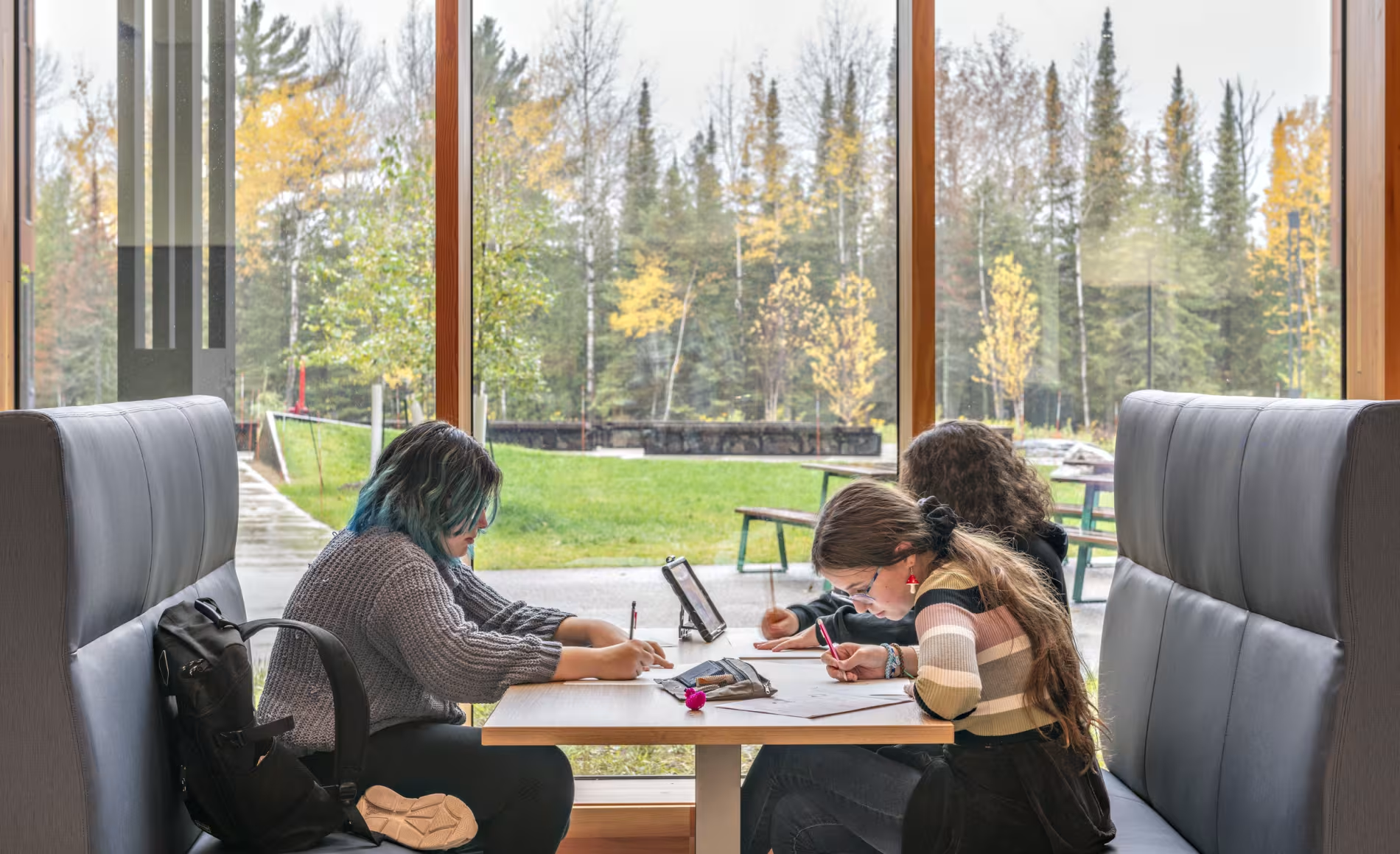
Aligning school design with adolescent development
Heidi Neumueller, AIA, NCARB, LEED AP, Principal
Amy Frye, Associate Principal
For district leaders, every facilities decision is also a decision about learning and student well-being. The physical environment can either support or constrain the experiences adolescents need to thrive.
Cuningham’s Heidi Neumueller and Amy Frye write in eSchool News about how districts can align school design with adolescent development, creating environments that foster belonging, safety, and meaningful relationships with peers and trusted adults. Below is an excerpt from the article.
Adolescence is one of the most consequential periods of human development, yet the environments designed to support it often fail to reflect its complexity. Spanning ages 10 to 18, this stage is marked by rapid neurological, emotional, and social transformation. During this time, the brain is not simply maturing; it is being actively rewired in response to experience. As a result, learning environments are not neutral settings but active participants in shaping how adolescents think, engage, and develop.
Neuroscience highlights adolescence as a period of profound plasticity. Gray matter is pruned to strengthen efficiency, while white matter increases to accelerate neural communication. At the same time, the brain develops unevenly: subcortical regions associated with emotion and reward mature earlier than the prefrontal cortex, which governs decision-making and self-regulation. This imbalance contributes to heightened sensitivity to peers, increased risk-taking, and a strong drive for exploration and identity formation. These are not deficits but adaptive features that prepare young people for adulthood. However, they also make adolescents particularly responsive to environmental conditions, both positive and negative. This raises a critical question: Do our schools align with how adolescents are wired to learn?
Traditional middle and high school models, which are often characterized by rigid schedules, passive instruction, and limited autonomy, can conflict with adolescents’ developmental needs. In environments where students have little control, minimal opportunity for social learning, and few meaningful connections, stress can increase while engagement declines. Given that adolescents are especially sensitive to social evaluation and emotional context, such conditions may undermine both well-being and academic outcomes. Research in developmental science suggests that effective learning environments for adolescents must address more than cognitive performance alone. Learning at this stage is inherently social, emotional, and experiential. Students can benefit from environments that foster belonging, safety, and meaningful relationships with both peers and adults. The concept of “mattering,” feeling valued and able to contribute, helps motivation. When students feel recognized and supported, they are more likely to take risks, persist through challenges, and engage deeply in their learning. Conversely, environments that prioritize performance over connection can exacerbate anxiety and disengagement.
Developmental Need | Spatial Conditions to Consider |
| Social Learning and Belonging |
|
| Emotional Regulation and Stress Management |
|
| Experiential Learning |
|
Contact Our Leaders

